

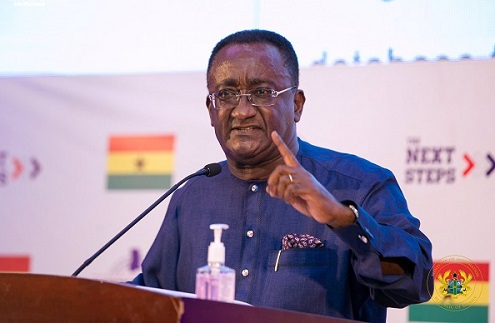
Immediate past Minister of Food and Agriculture and Flagbearer hopeful of the New Patriotic Party (NPP), Dr. Owusu Afriyie Akoto has called for prioritisation of investment in the Tree Crop Development Authority (TCDA) for socio-economic development of Ghana.
According to him, when implemented fully, the Tree Crop Development Authority could yield between six and 12 billion dollars annually, more than the three billion dollars Ghana was going to seek from the International Monetary Fund (IMF) to hopefully get its economy back on track.
He was speaking ahead of a public lecture at University of Professional Studies (UPSA) in Accra on March 13, 2023.
“We’re talking about a new authority trying to diversify out of cocoa. Cote d’Ivoire, which is our next-door neigbour, with five crops, they’re able to export seven billion dollars to eight billion dollars every year, Ghana is still stuck with less than 2 billion with cocoa doing about one and a half billion and the rest doing a few. That is why we brought in the Tree Crop Development Authority which has the potential to generate between $6 billion to $12 billion every year from six crops that we have selected and targeted.”
Dr. Afriyie Akoto bemoaned the lack of investment in a sector that can raise enough revenue for Ghana to manage its own affairs.
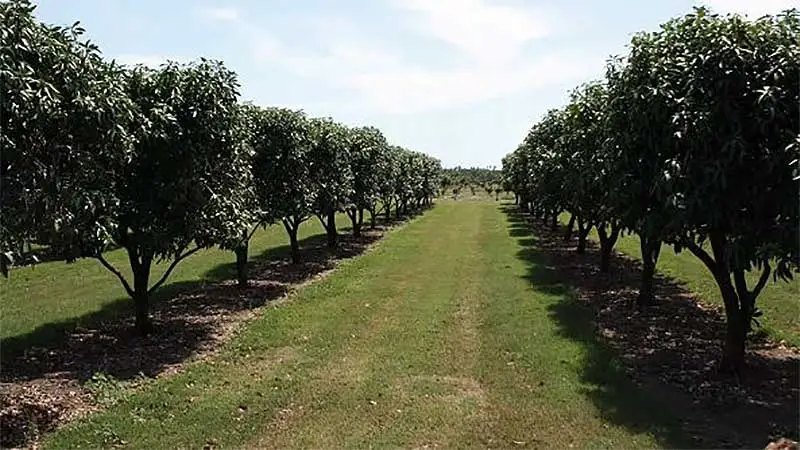
The Ghana Tree Crops Development Authority (TCDA) is expected to oversee and govern the production, processing and trading of six major tree crops; oil palm, coconut, mango, shea, rubber and cashew in a sustainable manner.
“This is a new organisation struggling with financing in terms of initial seed fund was recommended by cabinet for only $15 million over three years as we speak, we’re struggling with only $1.3 million disbursed to them.”
“That’s a classic example of why we need to prioritise agriculture and target certain specific areas which will let us out of the hands of the clutches of IMF where we’ve been 17 times since independence. So agriculture offers something very special and in the medium term, it will not be oil. We’ve been mining gold for 120 years; where has it brought us? We’re in the clutches of foreigners. And to be able to solve this problem permanently.”
He stated emphatically that the agriculture sector will receive a lot of investment when he becomes the President of Ghana.
“I’m saying that public resources generally should focus on agriculture first and that will generate by itself enough money for industrialisation, education, hospitals and infrastructure,” he said.
The former Agric Minister promised that he would make available the required resources and invest in the willingness of the ever-ready and hardworking Ghanaian farmer to ensure that the potential of the sector was reaped for the socio-economic development of Ghana.
Planting Food and Jobs
Having worked with United Nations for 18 years, he disclosed that it gave him the opportunity to travel to most countries around the world and it was based that he classified farmers in Ghana as hardworking and willing to go above and beyond when given even a little push.
Dr. Owusu Afriyie Akoto also spoke about the Planting for Food and Jobs Flagship programme which started under his regime.
“The Census of agriculture that we conducted in 2018 for the first time in 38 years shows that there are 3.1 million full-time farmers and out of that, the Planting for Foods and Jobs subsidy Programme was able to touch 1.7 million of them so it means that nearly half didn’t benefit but look at the outstanding results that we have achieved that countries from all over West Africa will be coming to take surpluses and obviously if there were no surpluses, they wouldn’t come here.
He believed that the current stability in the supply of locally grown-farm produces across the country is a result of the PFJ.
“There was this incident of 15 articulated trucks which had stopped in Tatale late last year taking our grains against the new regulation prohibiting the export of grains to our neighbouring countries. So we have to take steps to protect our food security after farmers in Ghana have responded very positively to our little incentive of subsidies on these two major items.“
