

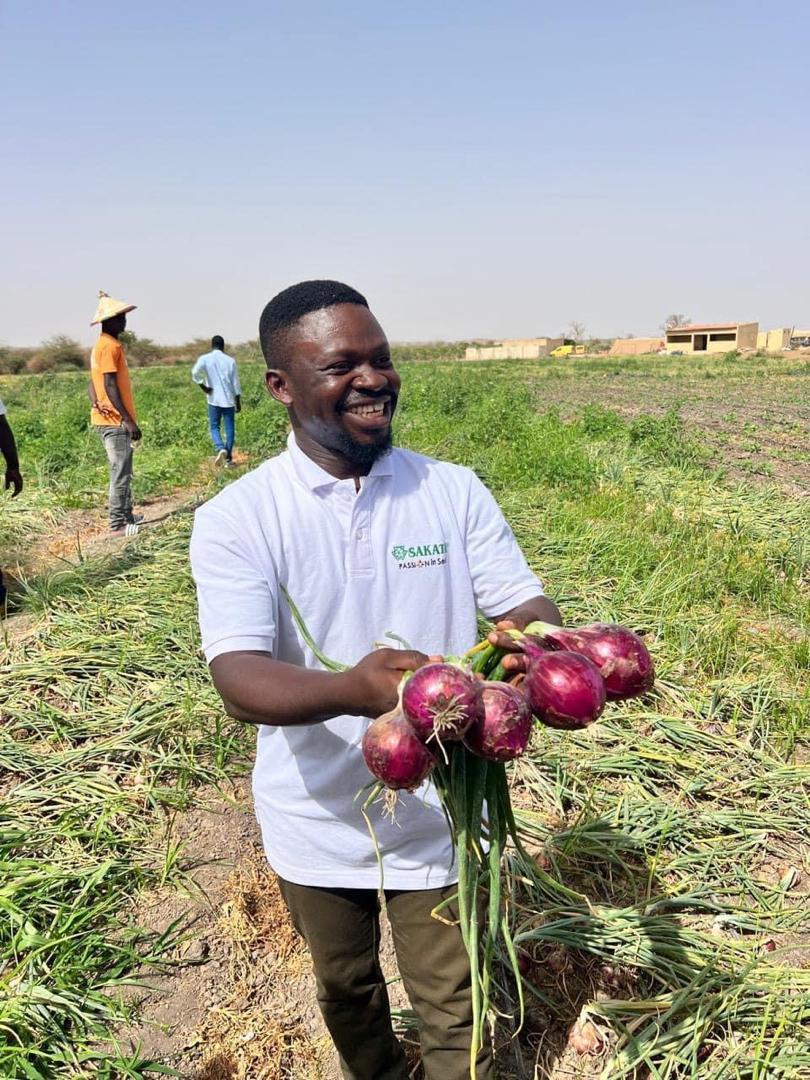
An agribusiness development expert, Dr. Victor Antwi, is advocating for targeted capacity building within Ghana’s financial institutions to improve their understanding of the agricultural sector and strengthen financing solutions for farmers.
He argues that banks often struggle to design appropriate loan products for agribusinesses due to a limited understanding of farming dynamics, particularly crop cycles and seasonal income patterns.
“If you’re unfamiliar with the yield patterns of a particular crop, it becomes difficult to estimate cash flow accurately,” he explained.
“For example, cereals and legumes usually require a six-month repayment window, and financing must be made available at least a month before planting begins.”
Dr. Antwi further noted that collateral system of loan packages for farmers is not helping the industry.
“Banks need to be supported to develop financial products that are not collateral-based, but instead rely on cash flow. Processors, downstream buyers and aggregators could be refinanced to enable onward financing of smallholder farmer activities, where repayment would be made in produce after harvest to the downstream companies,” he added.
Dr. Antwi believes that equipping financial institutions with this knowledge will reduce the perceived risk of lending to agriculture and lead to more tailored, practical loan packages for farmers, many of whom lack collateral but are capable of repaying through produce.
The Agribusiness Expert suggested implementing established financing models, like the Feed the Future Ghana Mobilising Finance in Agriculture (MFA) project, to tackle the ongoing issue of restricted financial access in the sector, which is often influenced by perceived risks.
The MFA, a five-year USAID initiative, sought to improve access to finance for farmers and agribusinesses. Advisors helped secure loans and attract investment. Partners included financial institutions to expand lending for agricultural inputs, like seeds and fertilisers, plus investments in processing and scaling operations.
The project unlocked US$330.62 million in financing, aiding 142,272 agribusinesses across various value chains such as maize, soy, cashew, shea, mango, and cowpea groundnut.
