

As Ghana moves deeper into the final quarter of 2025, its agricultural sector is pulsing with change. This can be seen from digital tools to policy shifts and from seed innovation to youth deployment. For those watching the fields, farms, and food systems, it’s clear that the country is trying to turn decades of challenges into momentum.
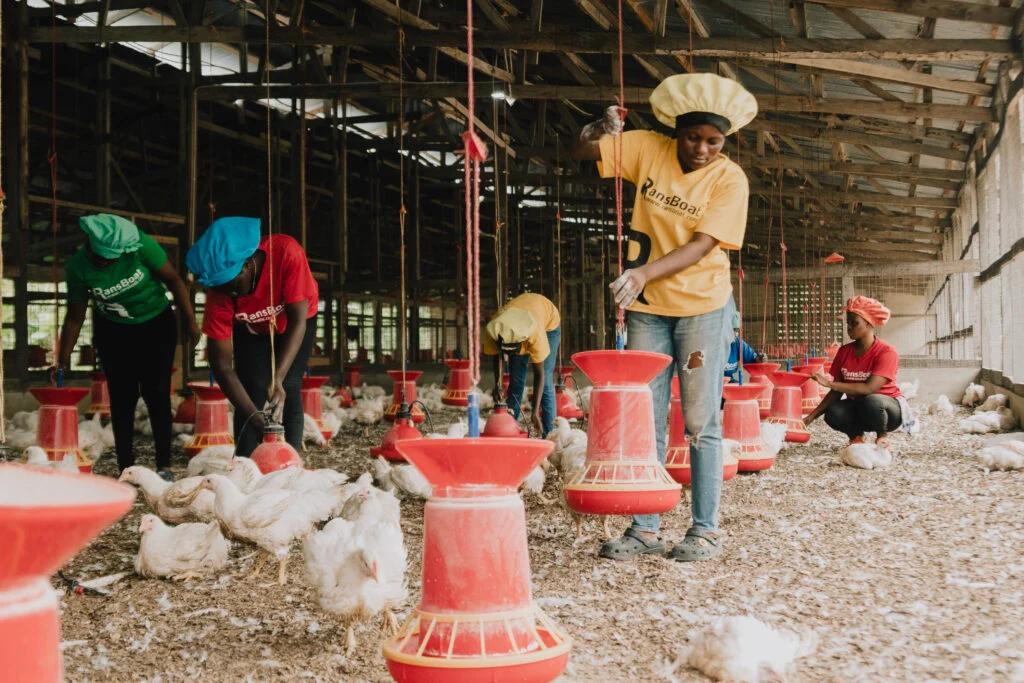
One of the most talked‑about moves in recent days is the government’s plan to send 5,000 agriculture and veterinary graduates to the field, under the umbrella of the Feed Ghana Programme.
These graduates are expected to work directly with farmers to bridge the divide between research and practice. This is to share modern techniques, monitor farms, and improve productivity. Vice President Prof. Naana Jane Opoku‑Agyemang announced the deployment during the Asogli Yam Festival.
This approach signals a renewed emphasis on human capital in the agricultural sector. It is not just delivering inputs, but also placing people in communities to catalyze change.
Behind the graduate deployment is a bigger vision of the Feed Ghana Programme intended as a game changer for food security, import substitution, and rural jobs.
For 2025, the government has earmarked GH¢1.5 billion to support this agenda. Funds are intended for:
Irrigation and expansion of farm land,
subsidized inputs like fertilizers and improved seed.
The goal is to shift Ghana away from over‑reliance on food imports and towards a model where local production feeds the population and fuels agro‑industry.
One significant structural step that came earlier in the year was the opening of a fertilizer blending plant in the Shai Osudoku district.
With a capacity of 385,000 tonnes per year, this facility is meant to reduce Ghana’s heavy dependence on imported fertilisers.
Officials say this will help stabilise input costs, improve supply chain resilience, and even open up export potential for blended fertiliser across West Africa.
In another move, Ghana also launched EMA‑i+ (Events Mobile Application Plus), developed by the UN Food and Agriculture Organization (FAO) to strengthen surveillance of animal diseases.
Veterinarians and field agents can now report diseases such as rabies, anthrax, or avian flu via their phones. This speeds response and control efforts. The tool is not just limited to livestock but also covers fish, bees, and wildlife.
In earlier trials (since 2019), such digital systems reportedly tripled the volume of disease reports. For Ghana, this kind of digital leap is vital in an era of climate change, zoonotic risks, and constrained resources.
Furthermore, farmer groups are now partnering with Ghana’s national genebank to access more diverse crop varieties, especially for indigenous species like Bambara .
Farmers test different seed lines on their land and feed back results. This improves both adaptation and local relevance. Nearly 90% of farmers in such groups report enhanced diversity access.
Farmers are better equipped to face erratic weather, pests, and diseases by having a broader genetic toolkit as a form of climate insurance for crops.
Even amid long‑running challenges like diseases , climate stress, and illegal mining, cocoa farmers are hoping for a rebound in the 2025/2026 season.
Amidst all these efforts, some challenges remain. Input supply like fungicides, quality seedlings and unpredictable rainfall patterns could still undercut potential gains.
Regardless, Ghana is the world’s second-largest cocoa producer, and any growth here has ripple effects across export earnings and rural livelihoods.
Looking ahead, Agrofood Ghana 2025 happening on the 28th to 30th October in Accra is another initiative agribusinesses, tech firms, government agencies, and farmers alike are looking forward to.
As a trade show that covers the full agricultural value chain from machinery, storage, and irrigation to processing, food safety, and packaging, it is expected to be a major platform for deals, demonstrations, and policy dialogue.
For Ghana’s agricultural sector, this event is an opportunity for new partnerships and innovations. Investments launched here may set the tone for 2026 and beyond.
What unites these trends is ambition. Ghana is not content to let its agricultural sector tread water. The direction is quiet clear; more local value, better inputs, digital tools, stronger human networks, and diversification.
Though there are many positive initiatives, policies and actions, there are also risks like climate shocks, weak infrastructure, delays in fund disbursement, coordination headaches across ministries, and ensuring that policies reach smallholders in remote zones.
For farmers , the coming months could define whether 2025 becomes a turning point. If Feed Ghana, graduate deployment, genomics, and digital platforms all deliver, the sector might be on it’s way of transformation.
For entrepreneurs, agronomists, extension agents and donors, the moments ahead are ripe for engagement. The field is changing. The players are mobilizing. The promise is there, and perhaps for the first time in a generation.
Story By; Caris Adjei London
