

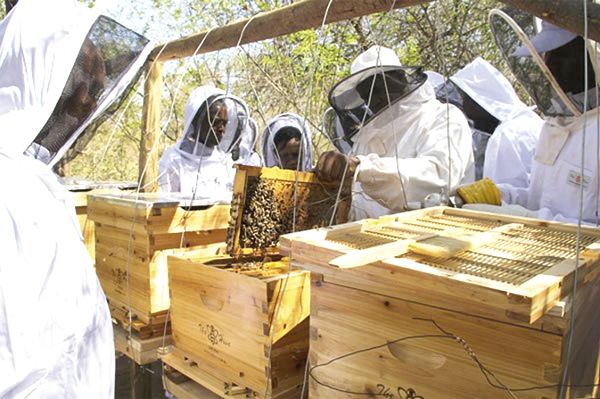
Israel Economic and Trade Mission to Ghana, in partnership with the National Beekeepers Association(NATBA), held a Hybrid breakfast Forum to introduce advanced Israeli technologies and practices aimed at increasing honey yields, improving hive management, and unlocking export potential for Ghana’s beekeeping industry.
The event, which was held on the 29th of May, 2025 at The Palms(Former Holiday Inn) – Accra, also aims to explore opportunities for collaboration between Ghanaian stakeholders and Israeli agritech companies under the theme: ‘Bringing Innovation and Growth in Beekeeping and Honey Export.’

The forum began with opening remarks from The Deputy Chief of the Mission of The Embassy of Israel to Ghana, Liberia and Sierra Leone, Mr Aviel Avraham. “Beekeeping May seem like a small part of agriculture, but in truth, it holds transformative power. From supporting biodiversity and pollination to sustaining rural livelihoods and contributing to non-traditional exports, beekeeping is a quiet yet vital force. Ghana, with its rich biodiversity and favourable climate, has all the natural ingredients to become a regional powerhouse in honey production. Yet, as we know, potential alone is not enough,” he stated.
“The sector continues to face challenges- the harmful impact of galamsey on honey production and the survival of bee populations as a result of deforestation and destruction of water bodies, bush fires, unpredictable rainfall patterns, limited suitable training, high cost of equipment and agrochemical pollution among others.”
“These issues limit the competitiveness of Ghanaian honey in the Global marketplace. That’s why we are here today to bring together experience, expertise and opportunity,” he revealed, emphasizing the importance of the event for the sector.
The Forum featured three main speakers from the National Beekeepers Association (NATBA), the Veterinary Services Directorate and the Chamber of Agribusiness Ghana.
The president of NATBA, Mr. Richard Kwei Mensah Okoe, while expressing gratitude to the Israel Economic and Trade Mission to Ghana and NATBA, said both countries play important roles in Beekeeping and Honey production.
“The Ghanaian government plays a crucial role in advancing the beekeeping sector. Through agencies such as the Ministry of Food and Agriculture (MOFA), Ghana Export Promotion Authority (GEPA), Ghana Standards Authority (GSA), and the Tree Crop Development Authority (TCDA), several interventions can be strengthened to support beekeepers,” he stated.
These methods include Policy Development, Training and Capacity Building, Access to Finance and Equipment, Market Development and Environmental Conservation Initiatives. He also called on the government to investigate and sanction agencies reported to divert funds meant for farmers and beekeepers.
Mr. Okoe also laid emphasis on the role of Israeli Agri-Tech in Beekeeping and Honey production. He mentioned that Israeli Agri-tech innovations provide an opportunity to boost honey yield, improve hive management, and enhance product traceability, making Ghanaian and African honey more competitive globally.
He called for collaboration to harness Ghana’s honey export potential. “We must invest in advanced beekeeping technology, enhance processing infrastructure, and establish strong international partnerships. Collaboration between Ghanaian stakeholders, the government, and Israeli technology providers will be pivotal in scaling up the industry,” he noted.
The president of NATBA concluded his speech by assuring the commitment of NATBA to strengthening training programs to enhance hive productivity, advocating for policy reforms that favour smallholder beekeepers and providing market access for Ghanaian honey producers.
The Business Development Director of the Chamber of Agribusiness Ghana, Mr John Kennedy Apegyah, also stated, “The sector has the potential to grow, and the value chain is very long. Everyone has a role to play.”
The forum featured demonstrations of smart hives monitoring systems that track hive health and productivity in real-time, Bee health diagnostics to detect and prevent colony diseases, Climate-Controlled hives to enable year-round honey production, Efficient post-harvest handling and processing, and Certification and traceability tools for compliance with international trade standards.
Israeli companies such as BeeWise, BeeHero and H4Bees, who have successfully implemented these innovations and are leading companies in the sector, also shared their insights with stakeholders.
Despite Ghana’s rich biodiversity and growing interest in agriculture, the beekeeping sector in Ghana faces several hurdles. These include low hive productivity, limited access to modern equipment, inadequate training, weak post-harvest handling and the absence of recognized certification for international markets. At the same time, there is a high global demand for organic, traceable honey.
The forum marks a growing recognition of how agri-tech can unlock new value chains in Ghana’s agriculture when tailored to local realities. Both Israeli and Ghanaian stakeholders agree that the path forward is through partnership, education, and practical innovation.
Story By: Caris Adjei London.
