

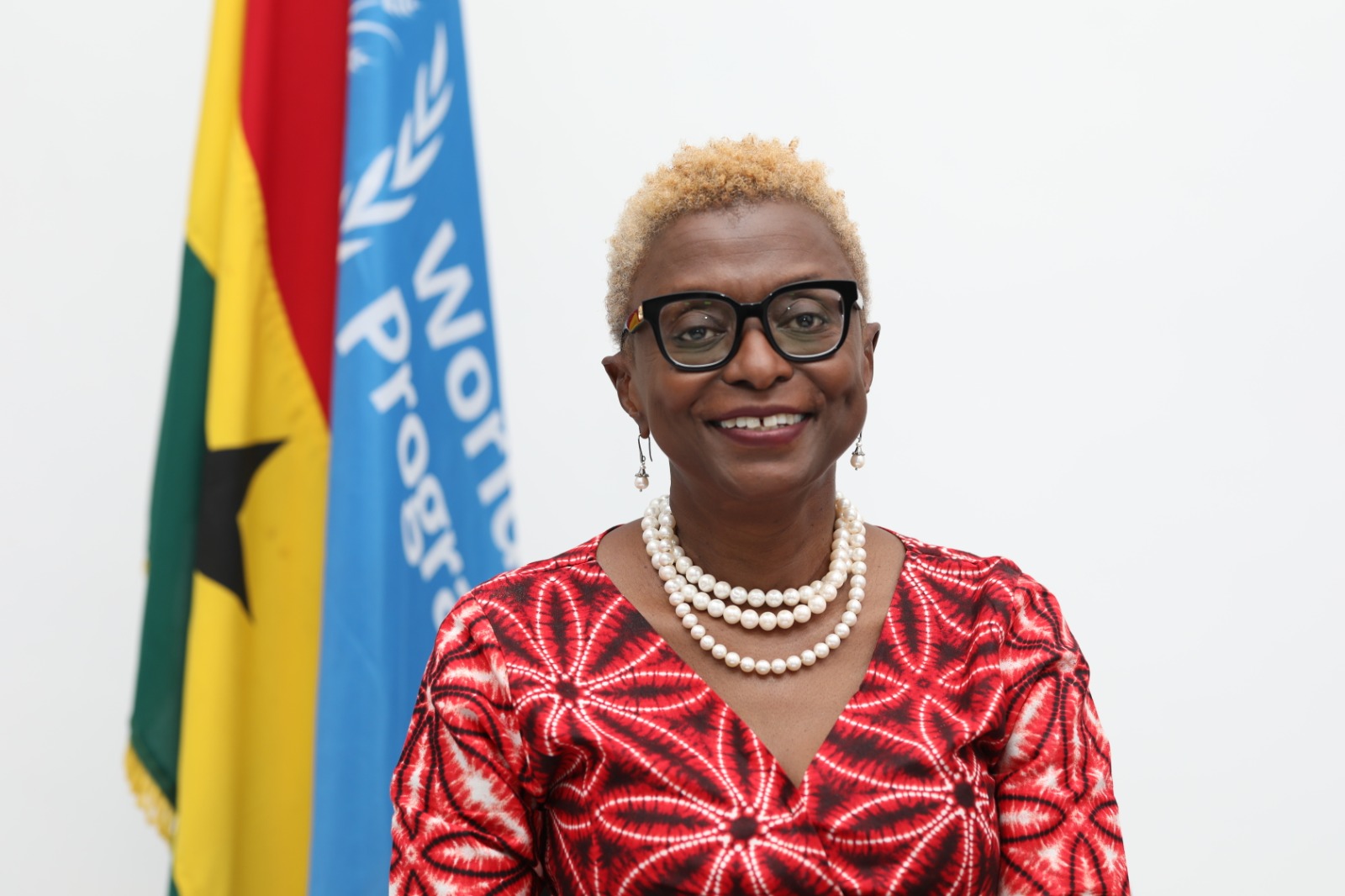
The World Food Programme plans to develop a digital application to track food and nutrition and encourage a general healthy lifestyle in Ghana.
According to the Country Representative and Director, Barbara Clemens, it is important for people to treat food security and nutrition with seriousness, adding that limited resources are major hindrances for the ordinary Ghanaian.
“Our vision for Ghana is that we’re liaising with partners in the private sector, other UN organisations and also the government. We’re creating a digital loyalty APP. The Ghana Health Service has a social protection change mandate for all Ghanaians to eat healthily, have healthy lifestyles, live heavily on locally produced food, so one of the questions we ask is, how can we do that?”
Explaining how the initiative will work, Madam Clemens told the host of Ghanaian Farmer TV Show, Enyonam, subscribers will earn points that will be redeemed.
“People know that they should eat healthily, but they have limited resources to afford it. They can’t afford it. For instance, if I’m a mother of four, I make $50 (GHC550) a month, I will give my four kids gari; they will go to bed not crying but I can still keep that $50, pay my rent, pay for education, all the other things that I have to prioritise in addition to food.
“So this platform that we’re envisioning would incentivise that mother like me to not have to make negative dietary choices or any other type of choice and how we do that is we award credits for positive choices and those credits will be redeemable for the things that they will prioritise, funds that they have to spend on nutritious foods, like a rent voucher, or educational voucher and it’s not just related to nutrition but also social protection,” Barbara Clemens emphasised.
She continued that, the platform will target change makers in the value chain that are championing healthy lifestyles.
“Let’s say for school feeding, if caterers follow the government’s mandate of sticking to the menu, cooking nutritious food and offering nutritious food, they will earn credits as well so that they could buy or contribute more to their income. Many of them may not purchase the food they’re supposed to purchase simply because they have to prioritise their limited resources.”
“Communities that are practising climate-smart activities, will earn credit for your community, you have more garbage collections, and more garbage containers, these needs are some of the mandates WFP Ghana would like to promote.”
The WFP Country Director, however, mentioned that it’s an expensive initiative, so partners from other UN organisations or NGOs that want to prioritise climate-related issues need to come on board.
Changing Lives In Ghana
Talking about the WFP’s operations in Ghana over the years, she applauded Ghanaian for maintaining its peace and stability as well as sustainable economic growth.
Ghana is one of those hallmark countries for WFP where they have been leading and assisting a number of programmes over the years.
“We’ve seen Ghana progress from needing humanitarian assistance to where we have a sustained period of economic growth. They’re in a position where they’re a lower-middle-income country, they’ve enjoyed a period of peace which is not the case for many of the African nations. So in this context, what we’re doing in Ghana is attempting to change lives where we’re looking at the government systems.”
“If there are any gaps, we’re attempting to assist in filling the gaps. With underlined assumption that we’re not here to supplant what the government is doing but play a facilitation role; heavily on creating strategic partnerships for people in the food security and agriculture value chain; what they’re doing and how we can step in to assist and elevate their voices so that we can change lives,” the Country Director of the World Food Programme explained.
Also part of what the World Food Programme do in Ghana, they work with the government of Ghana and development partners in accessing food and nutrition, and insecurity in the country. Madam Barbara Clemens disclosed that food security and nutrition are still major problems in the northern part of Ghana and the organisation is paying attention to their operations and the need to reverse the situation over there.
“The most recent statistical data and our comprehensive food vulnerability analysis show that the prevalence of food insecurity and food and nutrition is high in the north, that’s where we find ourselves (WFP). We still have a small humanitarian footprint there where we’re looking at community set up particularly vulnerable to assist but our direct implementation is there,” she told Enyonam on Joy Prime TV.
Supporting Smallholder Farmers
Aside from their operations in the northern parts of Ghana, WFP’s large development footprint can be anywhere. They have have been supporting some food processing companies in Kumasi in the Ashanti Region.
One of the flagship programmes the WFP used to promote food security was the Purchase For Progress (P4P) intervention.
P4P aims to improve smallholder farmers’ lives and livelihoods by increasing agricultural productivity, reducing post-harvest losses, improving market infrastructure and linking them to quality markets, including WFP
“Years ago WFP had a program called P4P where the focus was on smallholder farmers; our humanitarian activities in other countries, where we purchase food from suppliers and we used those purchases to distribute in other countries. So the P4P programme came about how can we ensure that our purchasing dollars go directly to the smallholder farmers?“
She added that “some of the lessons learned was that we’re doing this out of massive scale. We graduated that to this model that we have here in Ghana where we’re looking at actual agriculture producers, working with them to see to what extent are they directly purchasing from smallholder farmers. So these are the types of things we put our investment dollars in.”
One of the biggest beneficiaries of WFP’s partnership programmes is Premium Foods Limited, a food processing company. Barbara Clemens told the Ghanaian Farmer TV show that they rely on the company to supply food to Burkina Faso.
“They’re now a WFP vendor and we purchasing super cereal from them for our saving lives operations in Burkina Faso, hopefully, Afghanistan too, part and parcel of that is Premium purchasing of maize and soya from over 15,000 smallholder farmers. So the actual impact of saving lives and changing the lives of smallholder farmers is huge. It also builds resilience.”
“The next step is we’re also working with Premium to make sure that they open up the domestic line so you can see that even after WFP goes away in terms of if the demand is not there, those smallholder farmers are still supplying to Premium so that is the type of work we’re looking to do. It’s always what’s your impact in the agriculture value chain if we’re partnering with you, what is your impact to Ghana’s GDP,” she reiterated.
Ghana Does Not Need Much Donor Support Unlike Other Countries
“As I mentioned, there’s relatively strong economic growth and recovery, protracted period of peace in this country and then the slogan that everybody knows, the Ghana Beyond Aid. They’ve positioned themselves that, we (Ghana) don’t need aid, at least that is the interpretation, I will say that is a misinterpretation. That statement is aspirational; they envisioned a period in the future where Ghana will not have to rely on aid but I think because of the COVID pandemic, all of these issues that are recurring globally, we don’t need to take our foot off the paddle.”
“We don’t have to worry about Ghana because it’s stable, now they’re looking at Ghana as a middle-income country, it’s relatively stable in terms of peace compared to other countries where wars are brewing and rumours of wars are brewing; most donors have a sigh of relief when it comes to Ghana.”
Premium Foods Limited is a WFP-assisted specialised nutritious food processing company. According to the Founder and Managing Director, Tom Gambrah, the company faced financial challenges at the initial stage in raising funds of approximately $25 to $35 million for building our plants. WFP came in just in with the catalytic grant investment of $2.5 million and strong off-take commitment. These commitments were enough to unleash the needed funds from our bankers. The company is currently equipped with over 96,000 metric tons of cereals per annum.
Premium Foods LTD which has been expanding over the last 10 years had its new state-of-the-art factory commissioned by President Nana Akufo Addo in 2021.
Since the expansion, the food processing company has played a key role in changing the lives of smallholder farmers in terms of direct access to the market leading to the expansion of their farmlands.
