

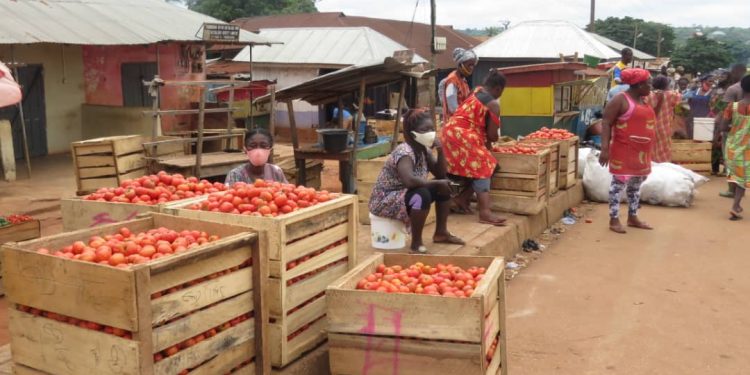
The prices of tomatoes at local markets have skyrocketed to astronomical levels lately. For instance, a box of tomatoes that was sold at ¢600 earlier this year now goes for ¢2,500.
Importers of the product attribute the surge in prices to the high exchange rate of the CFA Franc and the activities of the militant group, ‘Boko Haram’, who they said have been attacking both farmers and importers.
According to a report by myjoyonline, some traders in tomato markets within the Kumasi metropolis confirmed the situation.
A retailer at Race Course Market, stated that the same quantity of tomato fruits that were sold for ¢10 cedis now sell for ¢50 which is significantly affecting businesses within the tomato value chain.
As a result of this, the tomato market is visibly empty when compared to previous periods.
The importers have further explained that the continuous attacks on farmers and transporters in Burkina Faso by ‘Boko Haram’ are the main reason for these hikes in prices.
They alleged that many farmers have lost their lives while others have fled for their lives.
Akua Mansah, an importer, shared a personal experience of how they were attacked, and six farmers were instantly killed, leading to significant financial losses.
“The Boko Haram militants have killed a lot of the farmers, I witnessed an attack where six of them were killed, they nearly shot me but I was saved when I showed them my Ghana Card. Farmers who are still in the tomato business have increased the prices”.
Another importer, Hagar Kwofie, also recounted that her brother was shot and killed by these militants.
The traders say the situation has affected sales and could create shortages.
“Armed men attacked them on their way to Ghana and my brother got shot in the head, and died instantly.”
Meanwhile, the market queens for tomatoes in the Ashanti region want the government to increase the ‘One-Village One-Dam’ initiative and invest heavily in tomato farming.
They also want the government to stop the free fall of the cedis against the CFA to avoid further hikes in the price of tomatoes on the local market.
Market Queens, Abena Serwah and Hajia Mensurah are upbeat about the economic potential of tomato production when given the needed attention.
